Repeat head gasket failures after a fresh install usually mean the seating surfaces were never restored to specification. Replacing the gasket treats the symptom — corrosion pits, warped deck areas, and damaged piston cooling passages leave the failure path open.
Why Gaskets Fail Again
Head gaskets seal against microscopically flat surfaces. Overheating events, improper torque sequences, and corrosion between aluminum and cast iron components create high spots and low areas that crush gasket material unevenly. The next heat cycle opens the weakest point again.
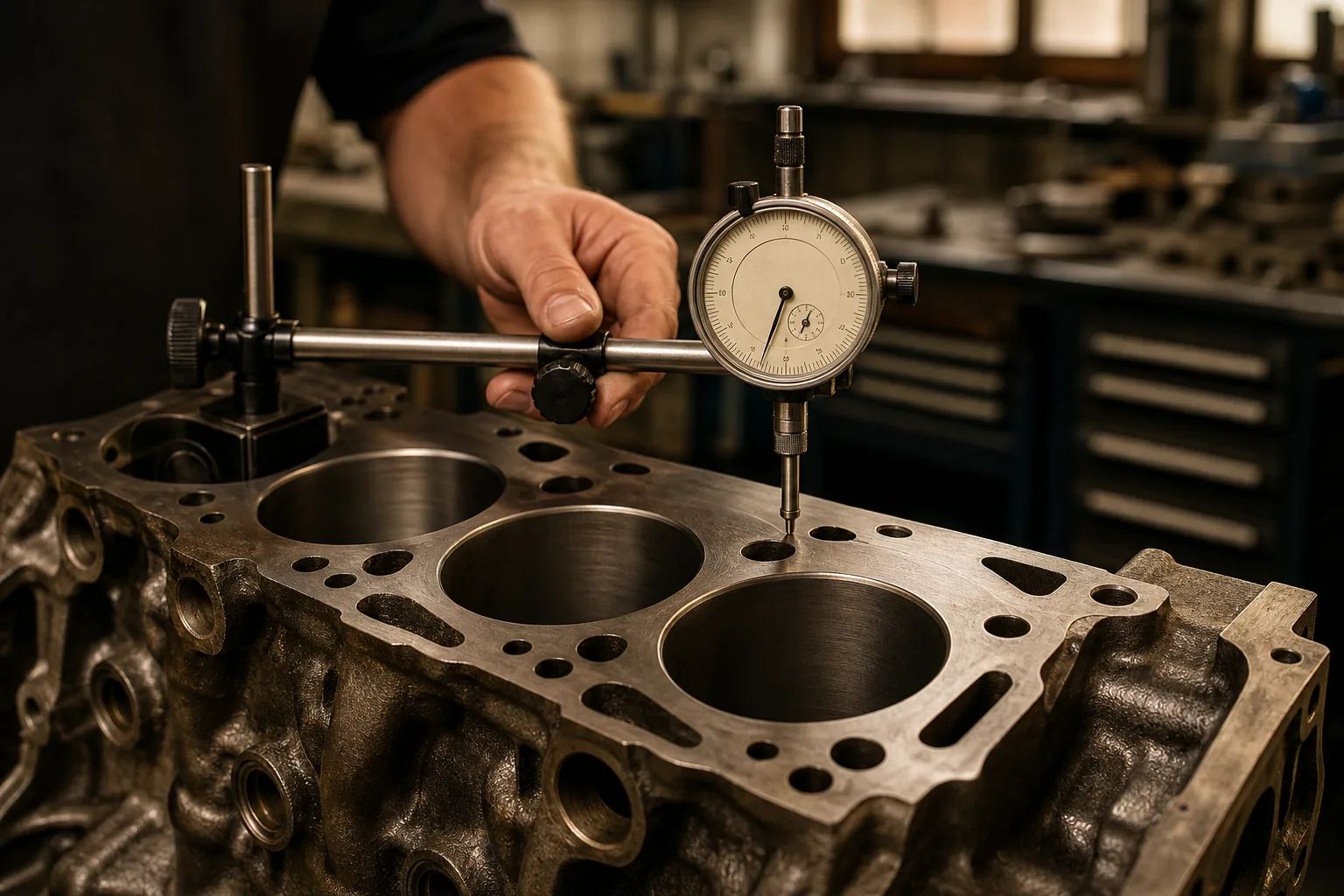
We measure deck flatness in multiple planes before any gasket selection. Exceeding manufacturer tolerance — even slightly — disqualifies a surface from direct reassembly regardless of how new the gasket looks.
Machining and Measurement
Surface Flatness
Precision straightedge and feeler gauge measurements establish baseline warp. When machining is required, we remove the minimum material necessary to achieve spec — preserving deck height and compression ratio within acceptable limits.
Ra Finish Requirements
Gasket type dictates required surface roughness. MLS gaskets need smoother finishes than composite designs. We match machining procedure to the gasket technology specified for the build — not whichever gasket is in stock.
Piston Cooling Oil Jets
Overhead jets must deliver adequate flow to piston undersides during high-load operation. We inspect jet nozzles for blockage, verify torque on mounting hardware, and replace jets when orifice geometry shows erosion or deformation.
Assembly Discipline
Contamination control separates a durable rebuild from a contaminated one. Block decks are cleaned, dried, and protected until head installation. Fasteners receive measured stretch or torque-plus-angle sequences per specification — never reused TTY bolts.
- Clean and deburr all bolt holes before head installation
- Apply specified sealants only where the manufacturer requires them
- Run break-in cycle with thermal verification before full load testing
- Document final deck measurements in the client handoff folder
Key Takeaway
A rebuild that skips deck restoration saves time upfront and costs more later. Restoring seating surfaces to spec — and servicing the oil delivery paths that protect pistons — is what makes a gasket job last beyond the first break-in cycle.