Intermittent blue smoke and a hot oil smell send many turbocharged vehicles back to shops with new gaskets — while the actual failure sits in a cracked feed line buried under heat shields where visual inspection never reaches.
Signs of Supply Restriction vs. Seal Failure
Seal failures typically produce consistent smoke under boost and visible oil at turbine housings. Supply restriction behaves differently: symptoms appear after warm-up, worsen under sustained load, and may disappear briefly after cooldown as oil viscosity changes.
Oil starvation accelerates bearing wear long before smoke becomes obvious. By the time a customer notices odor in the cabin, the turbo may already show axial play that makes rebuild economics unfavorable.
Pressure-Testing the Lubrication Path
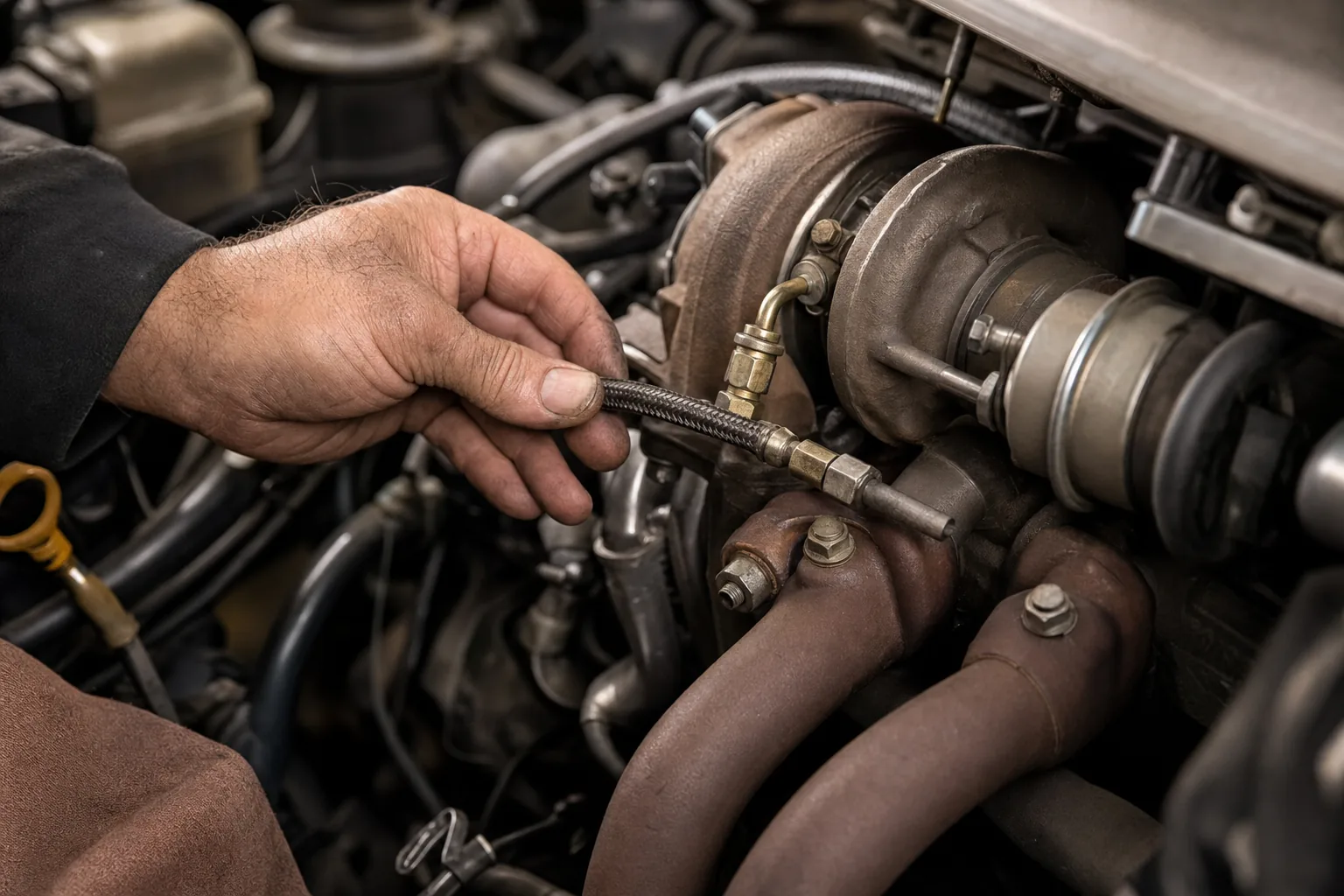
Feed Line Integrity
We cap the drain and apply regulated pressure to the feed port, monitoring for drop-off over time. Hairline cracks in hard lines flex closed when cold and open under heat — static inspection misses them entirely.
Drain-Back Verification
Restricted drain paths mimic starvation by backing pressure into the cartridge. We verify drain hose routing, check for collapse at bend points, and confirm the return line enters the sump above the oil level at all operating angles.
Banjo Bolt and Restrictor Audit
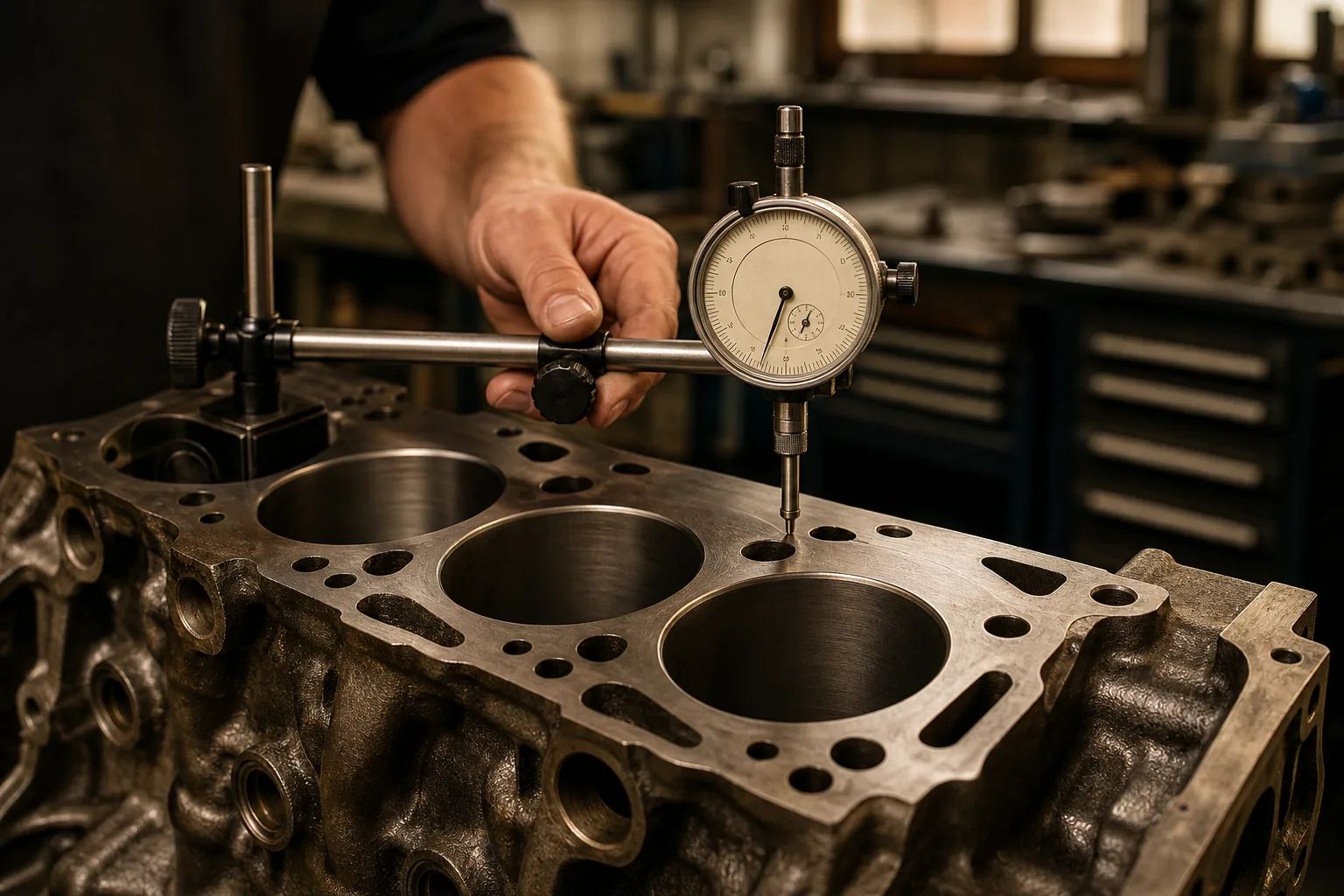
OEM feed restrictors must match specification. Aftermarket lines sometimes omit them or install incorrect orifice sizes. We measure and document orifice diameter before reassembly.
Repair Philosophy at ultramicrox
Turbo work in our bay follows the same unhurried intake as every other system. We remove heat shields systematically, photograph line routing, and replace entire feed assemblies when any section shows fatigue — not just the visibly damaged segment.
- Flush supply and drain paths before installing new hardware
- Replace crush washers and banjo bolts as a set
- Run warm-up verification to operating temperature before release
- Log post-repair boost and oil pressure readings where accessible
Key Takeaway
Gasket replacement treats a symptom when the lubrication circuit is compromised. Tracing oil flow from sump to cartridge and back — under pressure and temperature — reveals failures that hide behind the manifold.