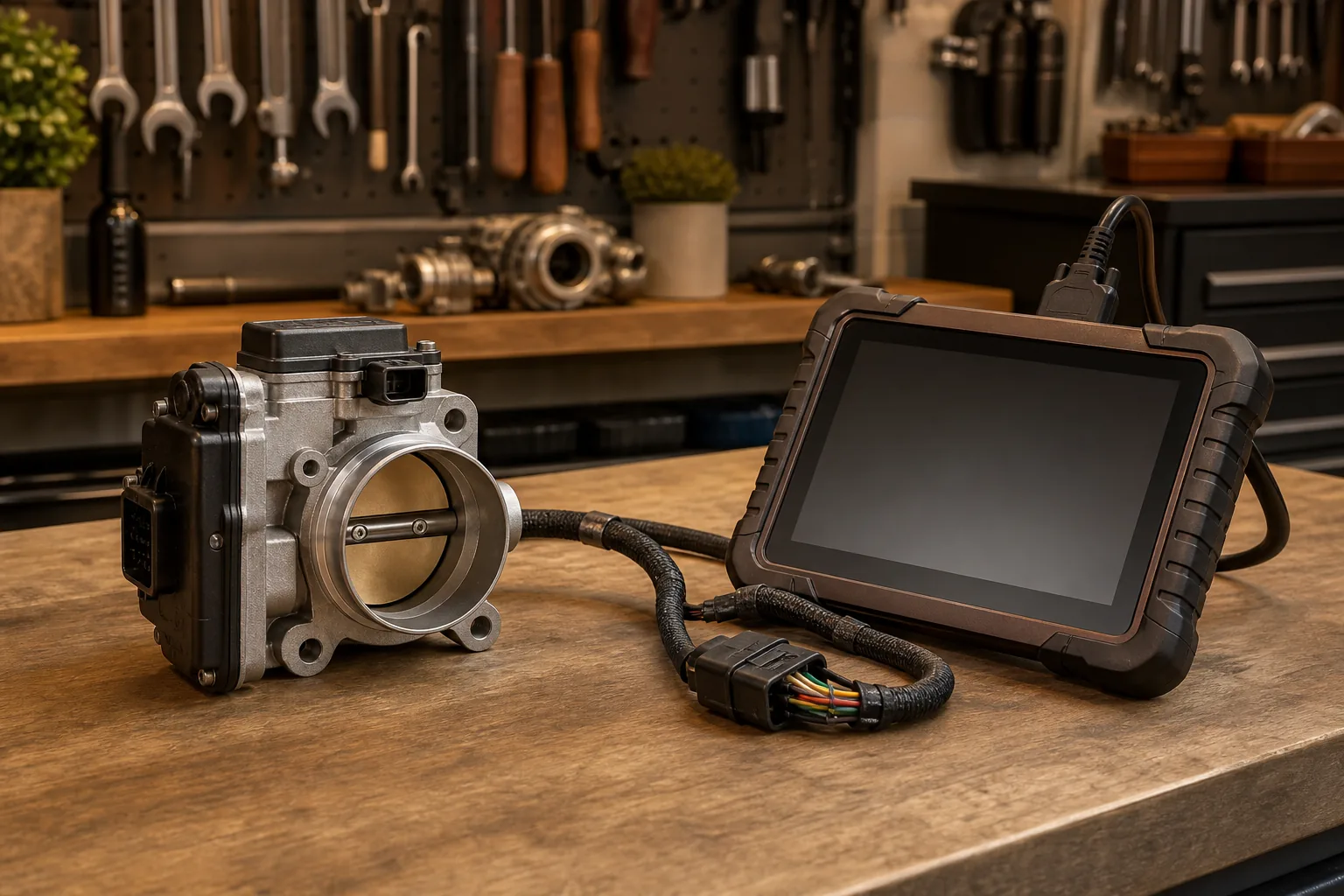
Hesitation off idle, surging cruise control, and inconsistent throttle response often get blamed on a worn throttle body. In our bay, the first suspect is pedal position sensor drift — and the most common comeback cause is skipping the relearn sequence entirely.
How Drive-by-Wire Differs From Cable Systems
Electronic throttle control separates pedal input from throttle plate position. The accelerator pedal module sends voltage signals to the engine control unit, which commands the throttle actuator. Two independent sensor tracks in the pedal module provide redundancy — and both must agree within tolerance.
When sensor tracks diverge, the ECU may limit throttle opening, trigger limp mode, or set codes that outlive the component that originally caused the drift.
Calibration Workflow
Zero-Point Verification
With the pedal fully released, both sensor channels must report values within manufacturer idle-range specification. We compare readings to service data before and after pedal module removal — never assuming the new part arrives pre-calibrated.
Hysteresis Testing
Slowly cycling the pedal from rest to full travel and back reveals lag between input and reported voltage. Excessive hysteresis indicates worn potentiometer tracks or internal module damage that replacement alone resolves.
Relearn Procedure
Manufacturer relearn sequences vary by platform: key-on cycles, specific pedal sequences, or scan-tool guided routines. We follow documented steps to completion and verify throttle plate sweep with live data before road testing.
Common Mistakes We See
- Replacing the throttle body when the pedal module is the fault source
- Clearing codes without performing relearn after battery disconnect
- Using non-OEM pedal assemblies with incompatible sensor curves
- Road testing before verifying cruise and idle stability at operating temperature
Each mistake produces a vehicle that drives acceptably in the parking lot but fails under the thermal and load conditions of normal use.
Key Takeaway
Drive-by-wire calibration is not a optional final step — it is part of the repair. Zero-point verification, hysteresis testing, and documented relearn separate a resolved complaint from a repeat visit.